

- HOME
- HISTORY PROJECT
Kenya Case Study: Industrial Modernization
Kenya Factory Upgrade: Boosting Output from 20 Shoes to 300+ Pairs Daily
Manual to Mechanized: A 20X Capacity Jump for a Footwear Plant in Kenya
Case Planned & Deployed by George Chou | Elitech Footwear Technology
What happens when an ambitious African footwear brand decides to stop relying entirely on slow, inconsistent hand-lasting? This real-world case study from our client in Kenya demonstrates how a targeted machinery intervention can completely redefine a business's cash flow and market dominance.
Originally, the factory operated on a pure manual setup. Output was capped at a painful 20 to 30 single shoes per day. Quality varied with every shift, and scaling up to meet local retail demand was impossible.
Elitech stepped in, analyzed the plant layout, and replaced the bottlenecks with a synchronized semi-automatic turnkey production line.
Phase 1: Overhauling the Preparation & Stitching Lines
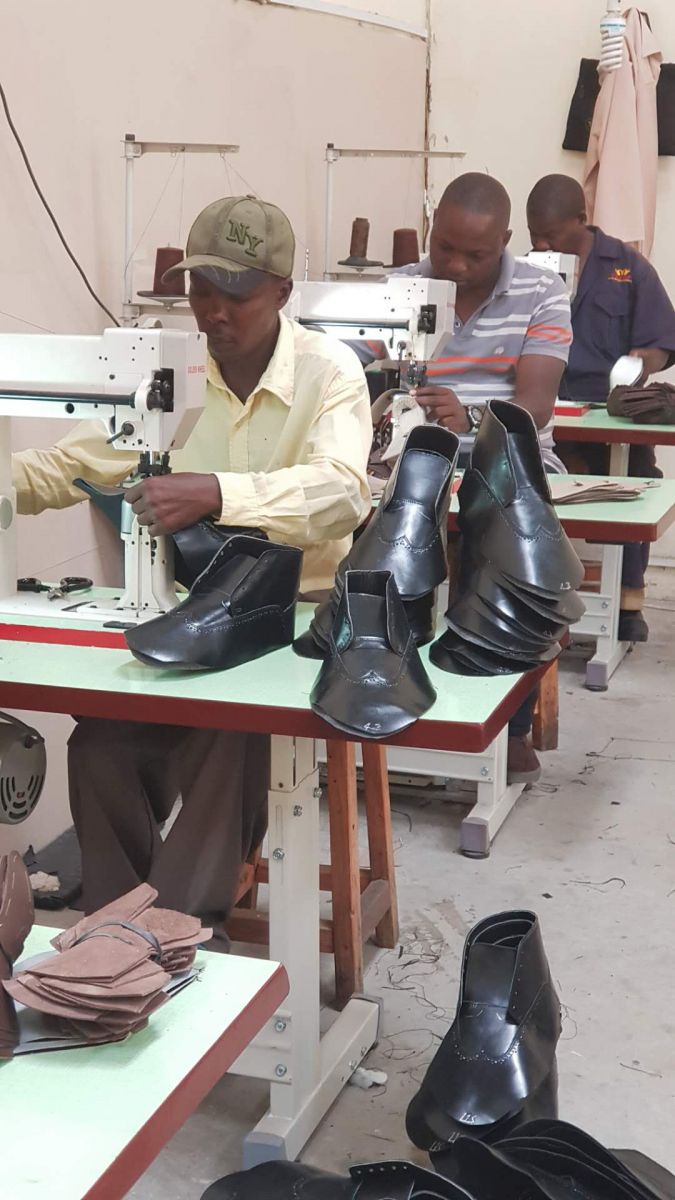
The transformation began by transitioning the workers from pure hand-stitching and basic tables to heavy-duty, high-efficiency Single Needle and Double Needle Post Bed roller sewing machines .
-
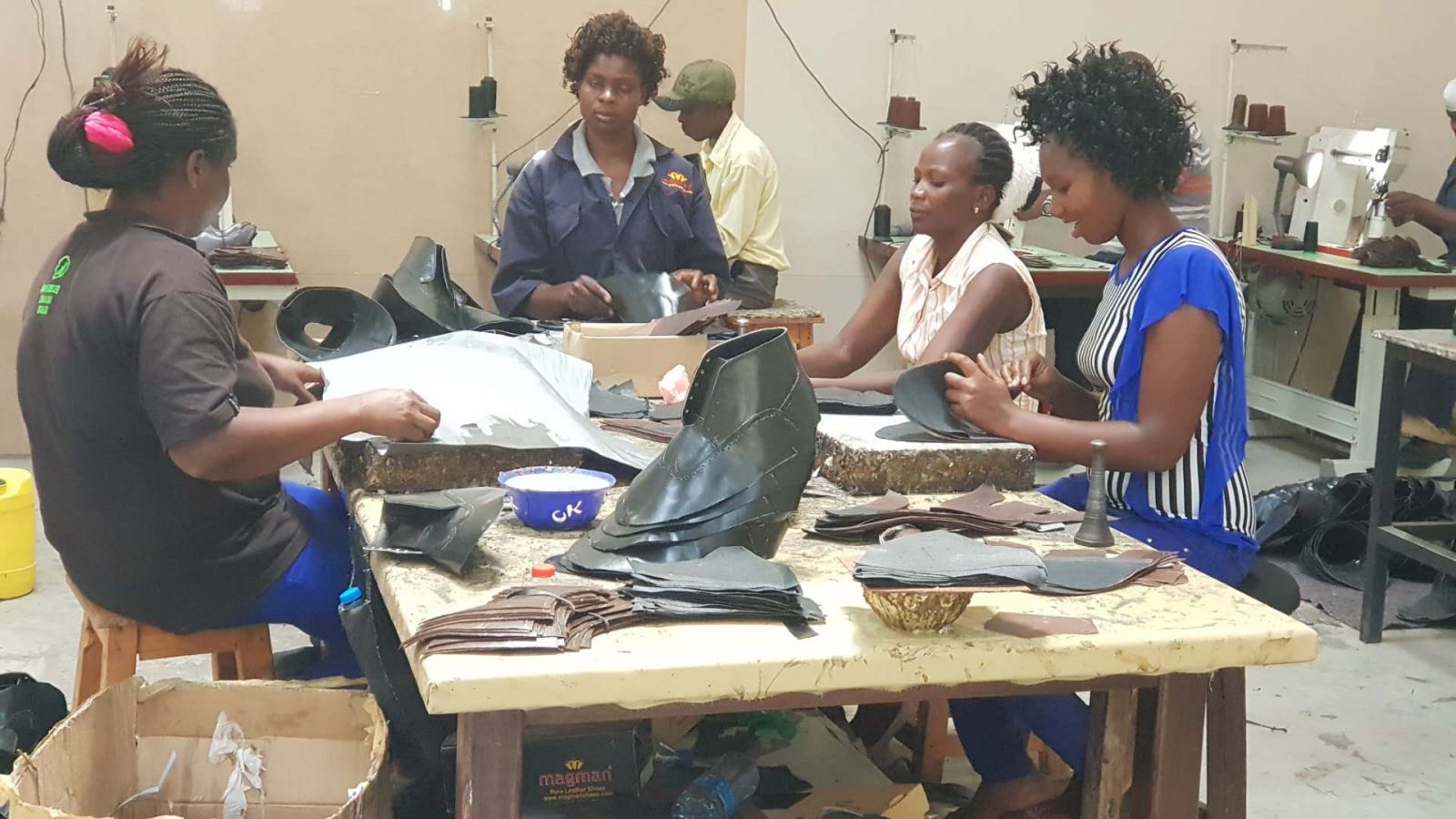
The Old Way: Operators spent hours hand-shaping and manually prepping leather components at basic workbenches
-
The Modernized Line: We installed customized sewing stations equipped with robust roller sewing machines. This immediately stabilized the stitch paths on heavy synthetic and genuine leathers, allowing the uppers to be prepped at a speed that could finally keep pace with a modern conveyor line
Phase 2: Eliminating the Lasting Bottleneck with SP Machinery
The true magic of this turnkey project happened in the lasting department. Hand-lasting is a physical strain that kills daily capacity. We eliminated this step entirely by introducing three core computerized workstations:
1. Computerized Toe Lasting (TS-818A)
We deployed the TS-818A Computerized Toe Lasting Machine
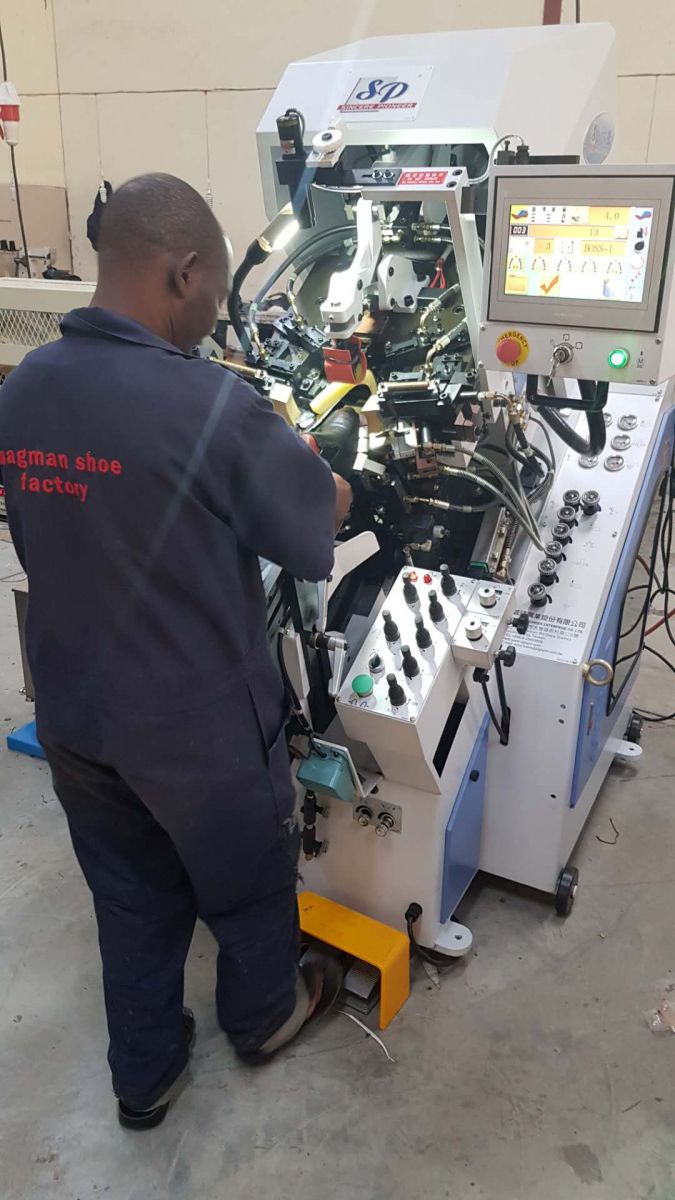
directly onto the factory floor. With its intelligent scanning and automated pincer controls, local operators who had zero prior automation experience were able to lock in a perfectly lasted toe box on day one.
2. Computerized Heel Seat & Side Lasting (TS-656MAS)
Right next to the toe laster, the TS-656MAS Computerized Heel Seat & Side Lasting Machine
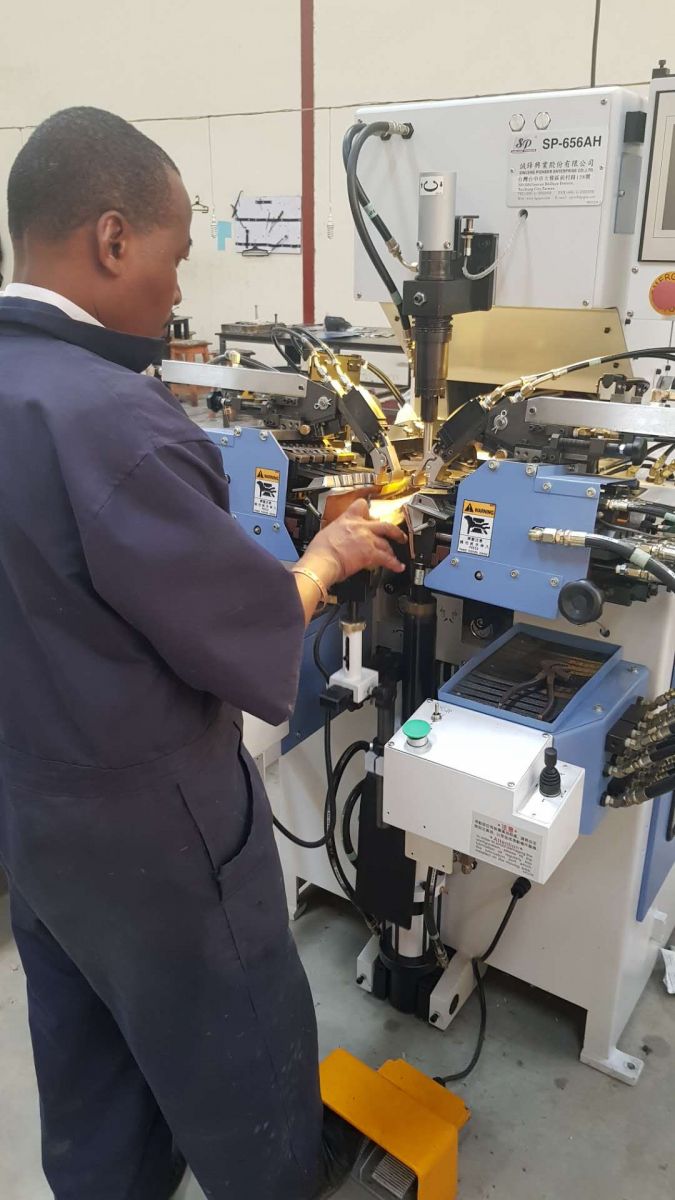
highly optimized initial investment. By automating the mechanical pull and tack/glue placement, heel margins became micro-precision consistent, eliminating sole-peeling complaints entirely
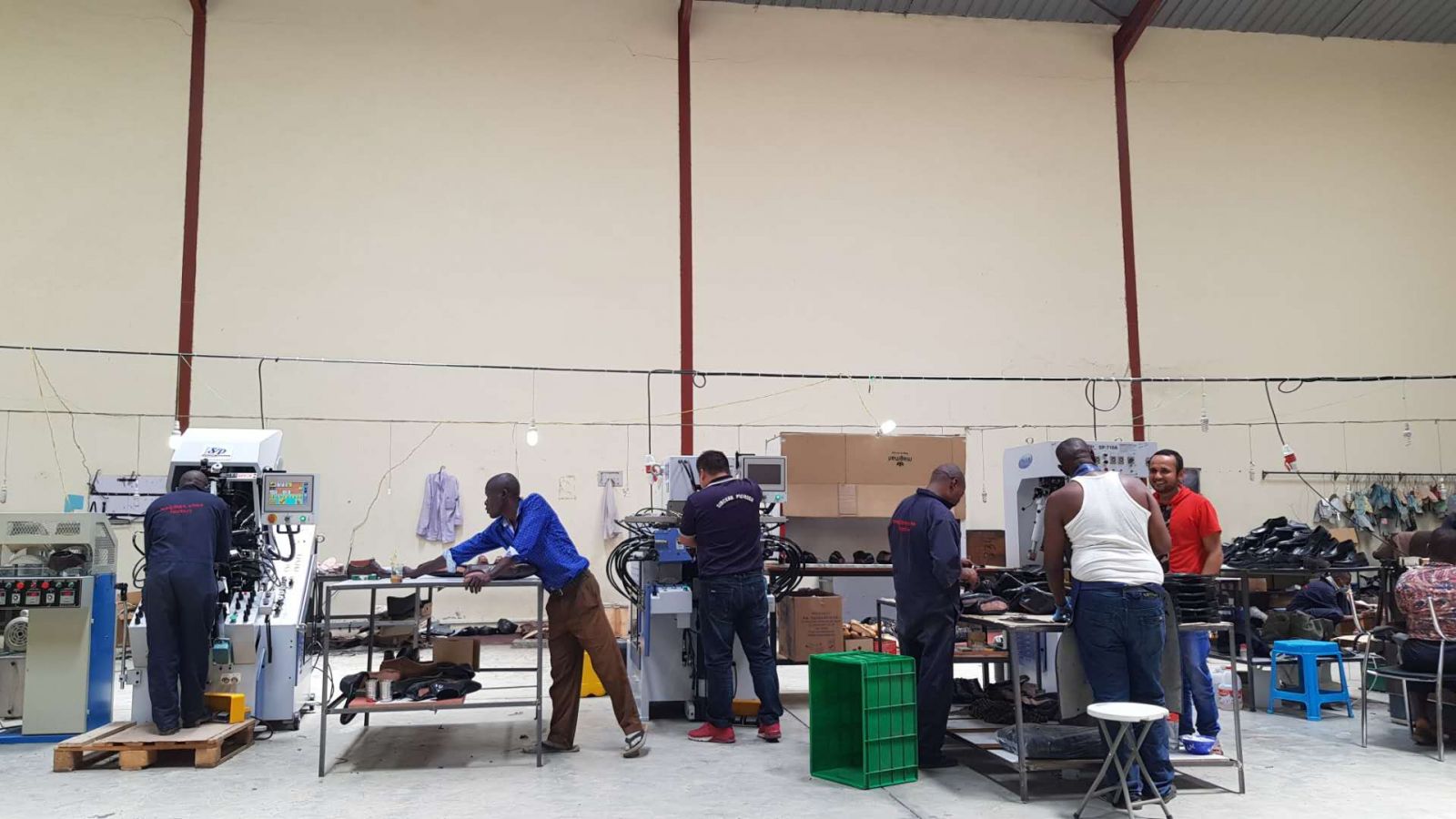
3. Walled Sole Attaching (TS-710A)
To lock the soles to the uppers permanently under the intense heat and Hydraulic Oil pressure system required for durable local footwear, we installed the TS-710A Walled Sole Attaching Machine.
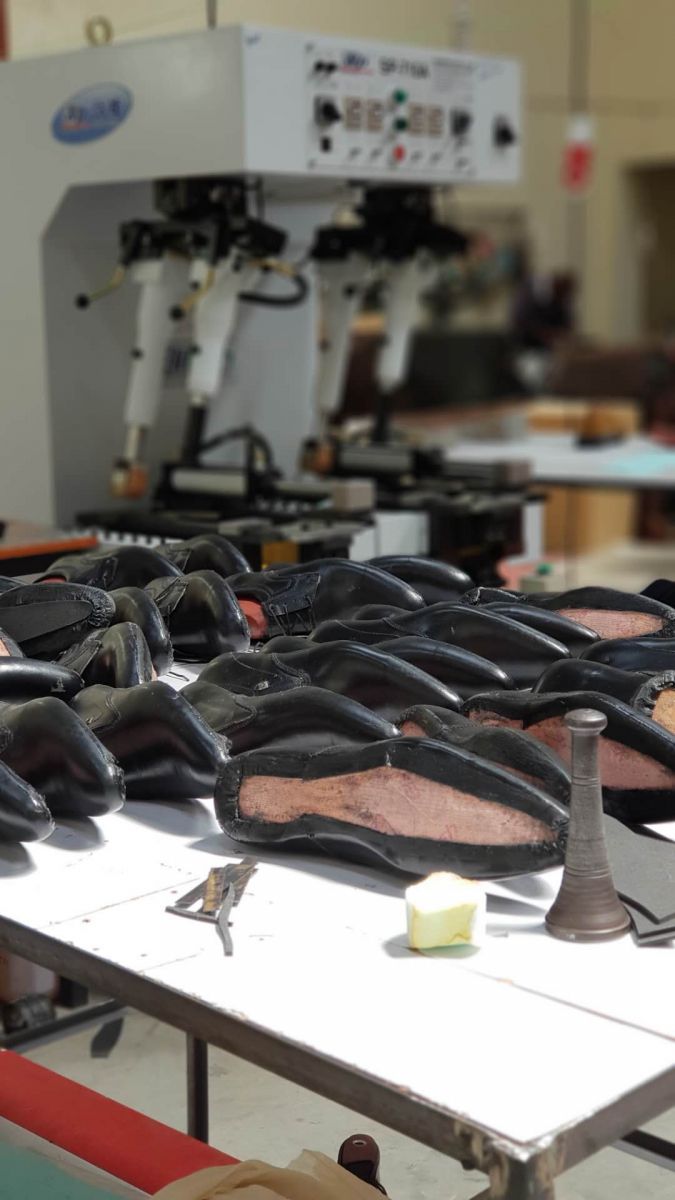
This ensured a high-pressure bond that manual presses could never replicate.
The Direct ROI Impact: From 20 Shoes to 300+ Pairs
The metrics from this Kenyan factory floor speak louder than any marketing fluff:
-
Before Elitech Intervention: 20 – 30 single shoes / day (Low quality consistency, manual dependency).
-
After Elitech Deployment: 300+ Pairs / day (Over 2,000% capacity explosion, rock-solid structural quality).
George Chou’s Factory Floor Insight: "Many African investors think automation requires a multi-million dollar fully robotic setup. It doesn't. As we proved in Kenya, by strategically replacing manual lasting with the TS-818A and TS-656MAS, you bridge the gap between local labor reality and international output standards. You don't just buy machines; you buy a predictable daily cash flow."